
The Promenade (Blackpool, England, UK)
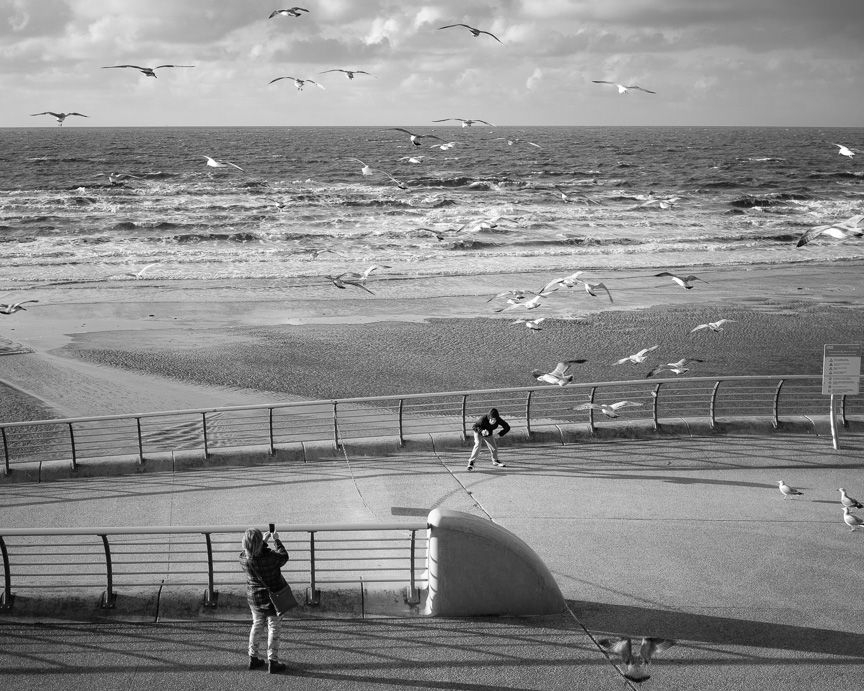
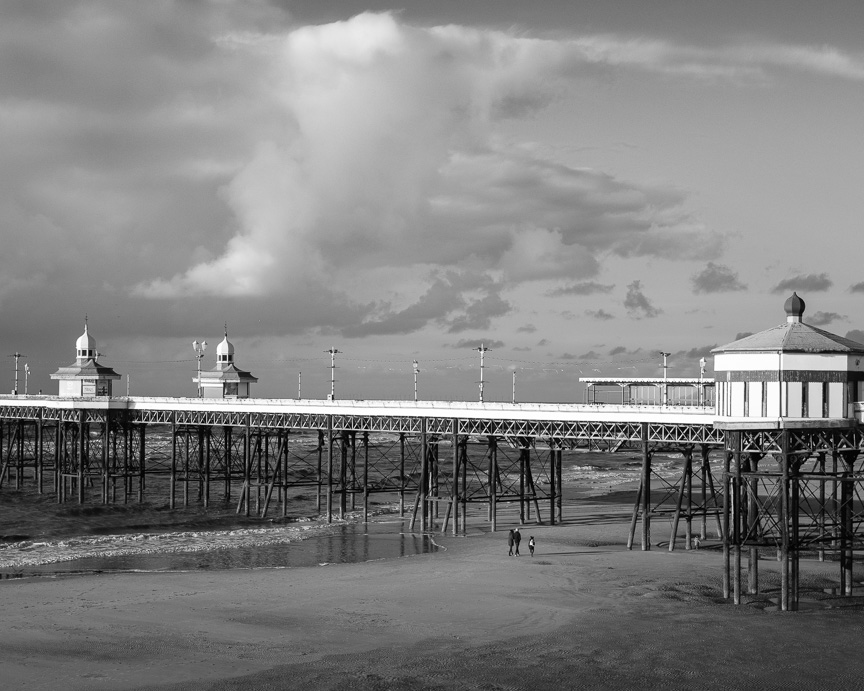
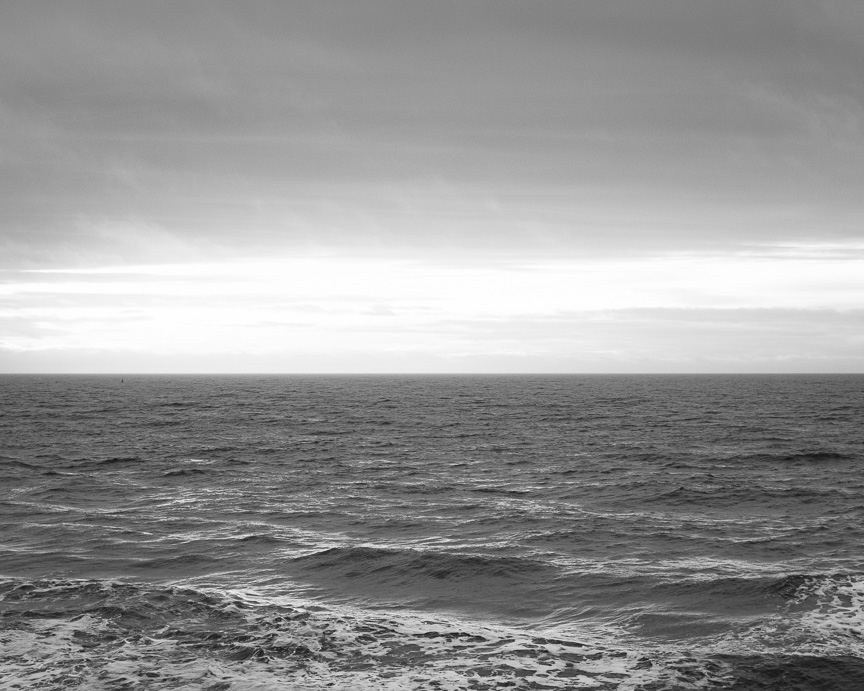
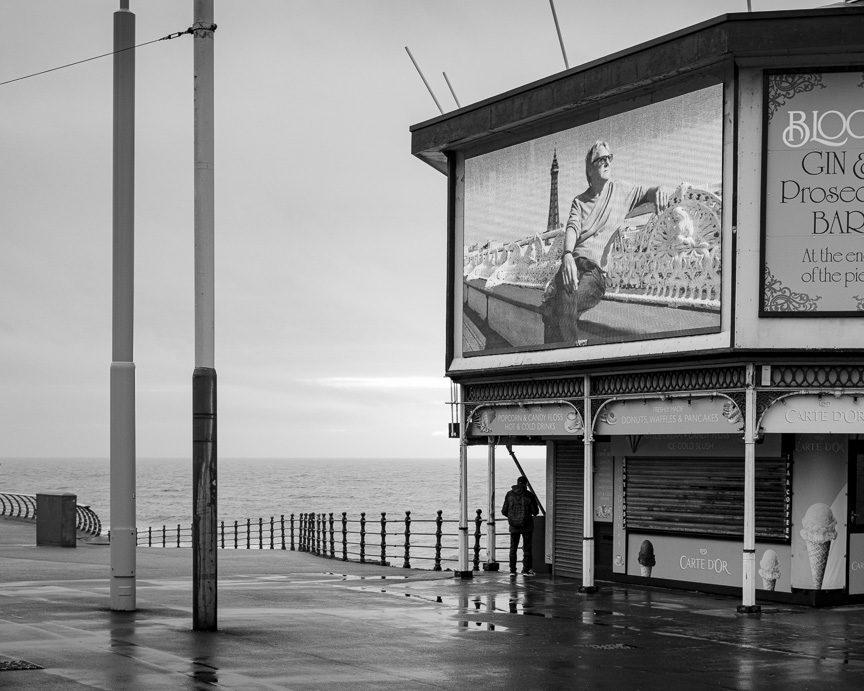
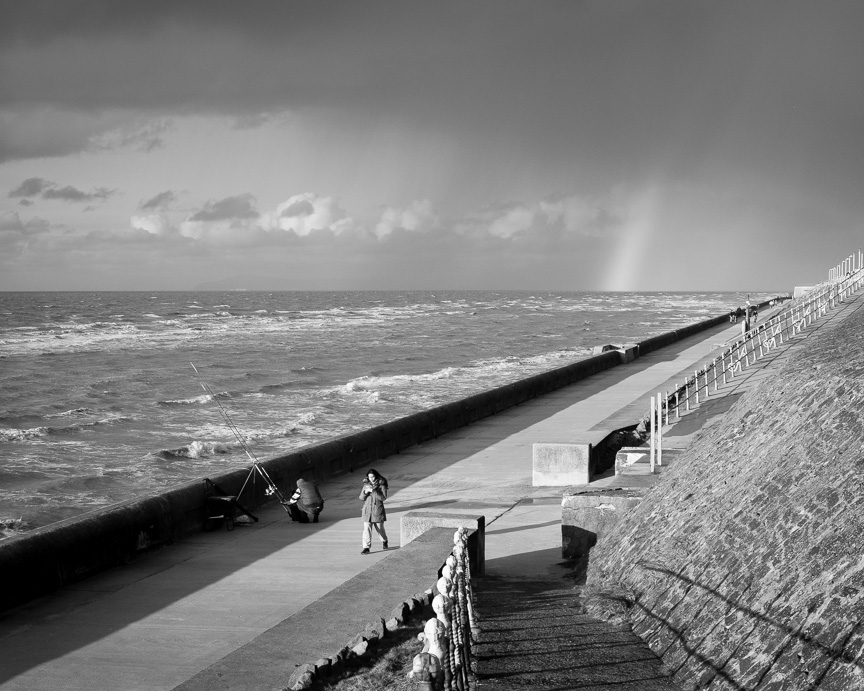
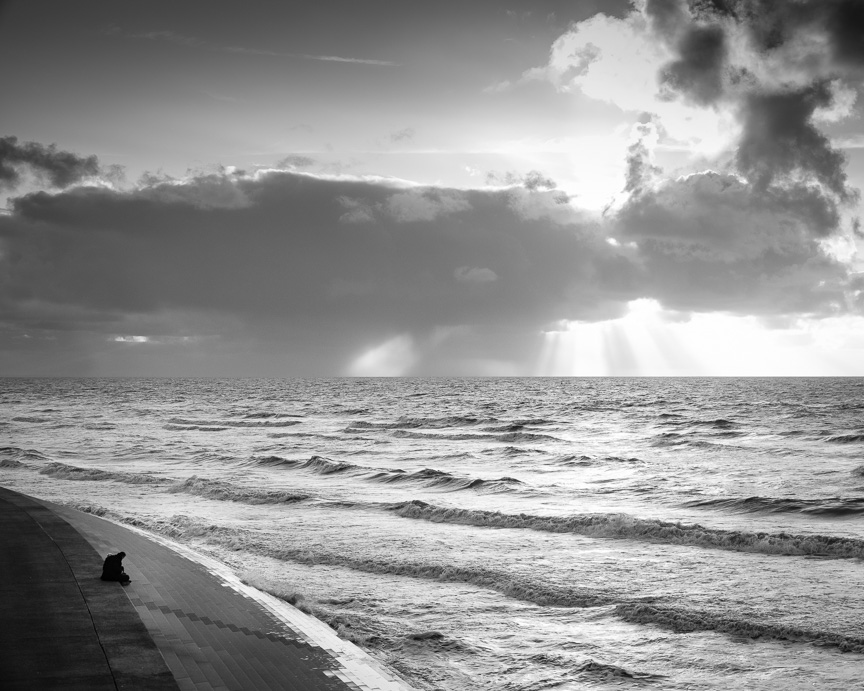
‘The Promenade presents dichotomies. The features here – design, architecture, shape and typography – reflect multiple histories: Britain’s nineteenth century, the modern movement, our desire to be more continental and the impact, on the British seaside resort, of foreign package holidays. Absorbed simultaneously, they allude to the Promenade as a once important destination. I imagine, throughout the 1900s, that it was a place where tourists and day-trippers – mostly those from the mill-towns of East Lancashire – expected that the sun would shine. The elaborate fairytale structures and glinting tramlines nod to decades of entrepreneurial investment, the labour that helped to build it, and the money spent by millions of workers during Wakes Weeks. The kaleidoscope of stalls scatter underneath one million multi-coloured bulbs hanging from telegraph poles and street lights. All the while the coarse sound of the sea, crashing into modernised defences. Dogs guided on leads gleefully parade along the smooth concourse and bark as the wind, and cyclists, swirl around them at speed. Agile seabirds hover, natter, then swoop in frenetic agitation. The vast natural flatness of space encircles all around, but is exaggerated by a crisp horizon, appearing to be over one hundred miles away. Yet, there is another perspective. Really, more an experience, heightened by a pandemic which has harmed the matrix of community, business and family here and, it seems, everywhere. It is not an emptiness, as the Promenade is always busy (at least visually), but rather foreboding. People appear not to mingle together, but rather navigate one another, with some distance. Large digital devices – mounted to walls or constructed on grand platforms – vividly transmit an ideal tourism, whilst analogues reveal quite another. Those who stroll the Promenade reflect contrast and variety. Some frame photographs of themselves, candidly, set in the foreground of overlapping, Celtic waves. Some appear lost, hoping to find fortune. Some meander with their kin, laughing and fooling along the geometric ebb and flow of golden sandstone paths. Some cast pointed fibre rods into the murk, then squint for opportunity. Some sit on vintage wooden benches, briefly, to rest their legs. Some seem forced to lie, damp and contorted, sleeping a dark and deep escape.‘ April 2020.

 john-harrison-photo.com